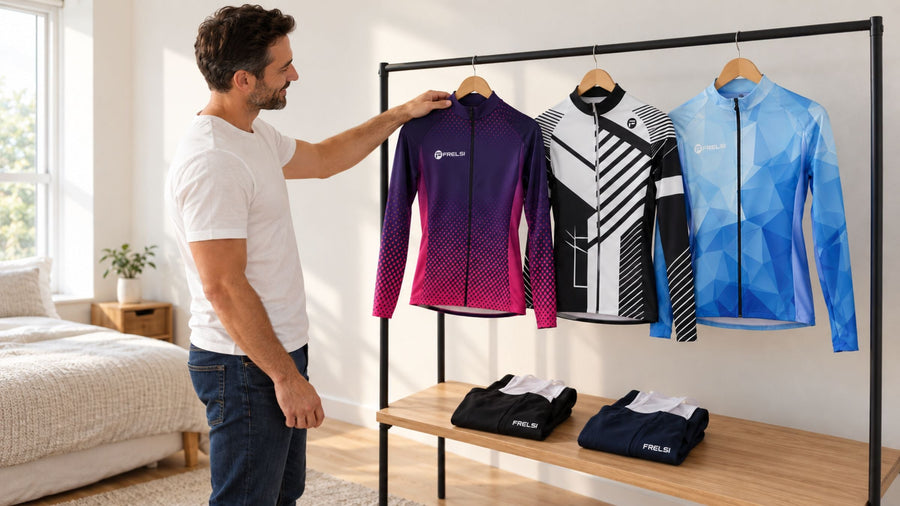
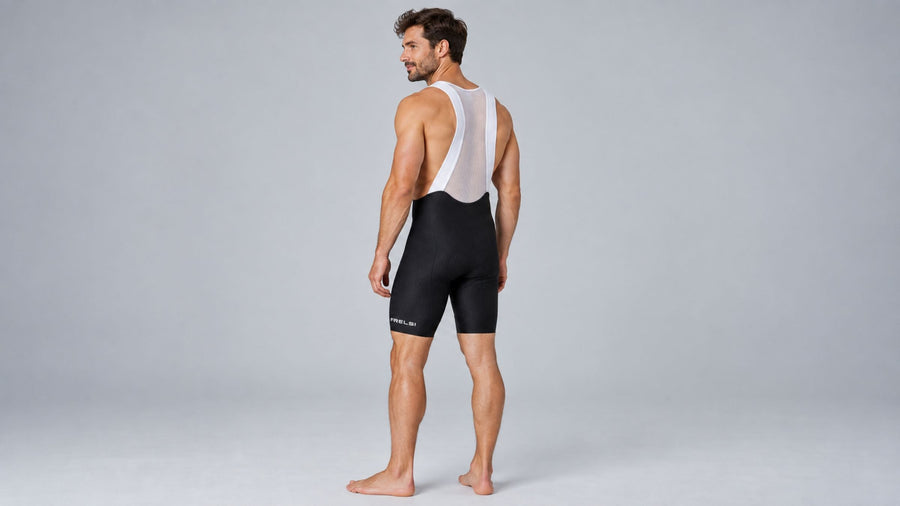
What to wear cycling depends mostly on the temperature and the wind. Above about 70°F, a short sleeve jersey and bib shorts are enough. Between 55°F and 70°F, add arm warmers or a long sleeve jersey. Below 55°F, switch to full-length bib tights and a warmer jersey, and below 45°F add a wind layer, full-finger gloves and something for your ears.
Use the guide below as a starting point, then adjust it for your own body. Some riders run warm, others feel the cold quickly. A few notes after each ride will tell you more than any chart.
Why temperature is only part of the story
The number on your weather app is the air temperature in still air. On the bike you create your own wind, so a 50°F morning can feel much colder on a long descent. Sun, cloud, rain and how hard you ride all change what you need.
Check three things before you dress: the temperature at the start and at the end of your ride, the wind, and the chance of rain. If the ride starts cold and ends warm, dress for the start with layers you can remove.
Above 70°F: short sleeves and bib shorts
A lightweight short sleeve or sleeveless jersey and padded bib shorts are all you need. Choose a jersey that wicks sweat and has rear pockets for food and a phone. Sunscreen on your arms and legs matters more than an extra layer.
Our Pro Team Bib Shorts use breathable, moisture-wicking fabric, and our sleeveless jerseys are made for the hottest days.
60°F to 70°F: add a light layer you can remove
A short sleeve jersey with arm warmers, or a light long sleeve jersey, works well here. Keep bib shorts on your legs. If the morning starts cool, a thin base layer under the jersey helps, and you can take it off at a café stop.
Dressing for cold rides
50°F to 60°F: long sleeves and leg coverage
This is where many riders switch to a long sleeve jersey. For your legs, bib shorts with leg warmers give you flexibility, while full-length bib tights are simpler if it stays cool all ride. Light full-finger gloves keep your hands working on the brakes.
40°F to 50°F: warm jersey, tights and a wind layer
Choose a fleece-lined long sleeve jersey over a base layer, and full-length tights. Our Pro Team Winter Bib Tights take the Pro Team chamois, Comfort-Flex straps and flatlock stitching into a full-length design with ankle zippers. Add a wind layer for descents, warmer gloves and a thin cap or headband under your helmet.
Below 40°F: protect hands, feet and ears
Your core can stay warm with layers, but fingers and toes get cold first. Use warm full-finger gloves, thicker socks and shoe covers, and cover your ears. Keep rides shorter until you know how your kit performs, and stay off the bike when roads may be icy.
| Temperature | Top | Legs | Extras |
|---|---|---|---|
| Above 70°F | Short sleeve or sleeveless jersey | Bib shorts | Sunscreen |
| 60–70°F | Jersey + arm warmers | Bib shorts | Light base layer if cool at the start |
| 50–60°F | Long sleeve jersey | Bib shorts + leg warmers or tights | Light gloves |
| 40–50°F | Fleece-lined jersey + base layer | Bib tights | Wind layer, gloves, cap |
| Below 40°F | Base layer + warm jersey + wind layer | Bib tights | Warm gloves, shoe covers, ear cover |
Keep reading: What to Wear for a Cold Morning Ride, Building a Cycling Wardrobe on a Budget, How to Recognize High Quality Cycling Bibs
Questions riders ask about cycling temperatures
At what temperature should I wear cycling tights?
Many riders switch from bib shorts to full-length tights somewhere around 50–55°F. If you feel the cold, switch earlier. Leg warmers over bib shorts are a good in-between option.
Should I feel cold at the start of a ride?
Feeling slightly cool for the first few minutes is normal, because you warm up quickly once you start pedaling. If you are already warm standing still, you will probably overheat on the first climb.
Do I need different clothes for wind and rain?
Yes. Wind makes any temperature feel colder, so a wind layer helps on exposed roads. For rain, choose an outer layer made for wet weather. A fleece-lined jersey keeps you warm but is not waterproof.